Choosing Where to Go With One Day
Brighton is compact enough that most visitors find they have a spare day, and it is unusually well placed for using one. The town sits at the foot of the South Downs with a mainline railway behind it and a coastal road running east and west, which puts several of the best landscapes and small towns in southern England within an hour without a car. What follows compares four options rather than listing everything possible. Because timetables, fares and seasonal services change constantly, treat every travel note here as a prompt to check current information rather than as a schedule.
Devil’s Dyke and the Downs Above the Town
The nearest escape, and the one that requires least commitment, is straight up. The South Downs rise immediately behind Brighton, and Devil’s Dyke is the classic viewpoint: a deep dry valley cut into the chalk, with an enormous view north over the Weald towards the distant ridge of the North Downs. On a clear day the view is genuinely startling, because the ground falls away so suddenly after the gentle climb.
The Dyke is a dry valley formed under periglacial conditions, when the chalk was frozen and meltwater could not soak away as it does now. Local legend, more entertainingly, attributes it to the Devil digging a channel to let the sea in and drown the churches of the Weald. Both explanations are worth carrying up the hill.
Getting there
A seasonal bus service runs from central Brighton up to the Dyke in the warmer months; it does not run all year, so check before setting out. Alternatively, walk. Several routes climb out of Brighton and Hove onto the Downs, and the ascent is steady rather than steep. Chalk grassland paths are slippery when wet and there is very little shade, so plan for whichever of those applies.
What to do when you arrive
The main activity is walking the rim of the valley and following the ridge in either direction. There is a pub at the top and generally an ice cream van in season, but the point of the place is the landscape and the paragliders using the updraught off the escarpment. Half a day is enough; a full day is easy if you keep walking.
Lewes
Lewes is the county town of East Sussex, about fifteen minutes from Brighton by train, and it is the best single option for a visitor who wants history rather than landscape. It sits in a gap where the River Ouse cuts through the Downs, and the town climbs the hillside above it in a tangle of steep streets and twittens.
The main things to see are close together. Lewes Castle occupies the high ground, with a keep you can climb for a view of the Ouse valley and the surrounding hills. Anne of Cleves House is a timber-framed town house associated with Henry VIII’s fourth queen through her divorce settlement. The high street is a working one, with independent bookshops, antiques and a long-established brewery whose presence is noticeable on the air. Steep flint-walled lanes run off it in both directions.
Lewes is also famous for its Bonfire Night, held on and around 5 November, when several bonfire societies process through the town with burning torches and effigies. It is spectacular and enormously crowded, the town’s capacity is limited, and transport arrangements are heavily modified on the night. If you intend to go, research it properly in advance; it is not an event to wander into.
The Seven Sisters and Beachy Head
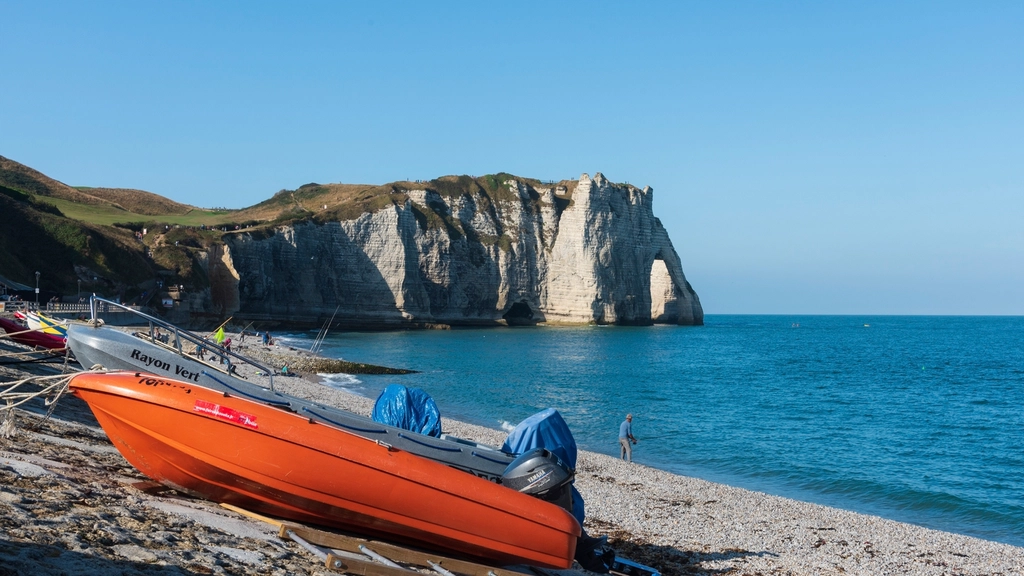
For most visitors the chalk cliffs east of Brighton are the outstanding day out. The Seven Sisters are a sequence of chalk headlands where the Downs meet the Channel, ending at Beachy Head above Eastbourne. Because there is no sea wall and no development along this stretch, the cliffs remain raw, white and actively eroding, which is exactly why they look the way they do.
Where to start
There are two usual approaches. From the west, the Seven Sisters Country Park at the mouth of the Cuckmere valley gives a level walk along the meandering river to the sea, with the first of the cliffs rising ahead. From the east, Birling Gap sits at a break in the cliffs with beach access and facilities, within reach of Beachy Head and its lighthouses. A strong walker can link them along the clifftop; most people do one end.
Getting there
A coastal bus service runs east from Brighton along the A259 and serves the villages and access points along this coast. Alternatively take the train east and pick up a local bus. Journey times run to something over an hour to reach the cliffs, and services thin out considerably in the evening and out of season, so plan your return before you start walking.
Safety
This matters. The cliff edge is undercut and unstable, sections collapse without warning, and there is no fence for most of the length. Stay well back from the edge, keep children and dogs close, and do not sit or stand on the overhang for a photograph. Equally, do not walk at the base of the cliffs, where rockfall and the rising tide are both genuine hazards.
Arundel
West rather than east, Arundel is the quietest and most self-contained of the four. It is a small town in the Arun valley dominated by two enormous buildings that face each other across the rooftops: Arundel Castle, the seat of the Dukes of Norfolk, restored and rebuilt on a grand scale in the nineteenth century, and the Roman Catholic cathedral, a soaring French Gothic revival church that looks far larger than the town beneath it.
Below them the town is small, walkable and pleasant, with antique shops, tearooms and a bridge over the Arun. On the edge of town a wetland centre occupies the water meadows, with hides, reedbeds and boat trips, which makes Arundel a good choice for a mixed group where not everyone wants a castle.
Trains run west from Brighton along the coast and then inland, usually with a change, and the journey generally takes something over an hour. Castle opening is seasonal and the grounds and rooms have different access arrangements, so check before you travel rather than turning up.
Travelling Without a Car
- Trains are the backbone. Brighton station is a mainline terminus with frequent services east along the coast, west along the coast and north to London. Lewes and Arundel are straightforward rail trips; the cliffs are rail plus bus.
- Buses reach the landscape. The places trains do not serve — the Downs above the town, the villages along the cliff coast — are reached by bus, including seasonal open-top and countryside services that run only in the warmer months.
- Check the last service first. Rural and seasonal services stop early. Decide your return journey before you commit to a walk, particularly in autumn and winter when it is dark by late afternoon.
- Consider a day ticket. Operators offer various day and area tickets that can be better value than singles, but the products and prices change; ask at the station or check the operator’s current information on the day.
- Walking is a real option. The South Downs Way passes close to Brighton, and several well-marked paths climb onto the Downs directly from the town, so a day out need not involve any transport at all.
Matching the Trip to the Day
Weather should decide for you. Clear and dry, take the cliffs or the Dyke, because both are entirely about the view and both are miserable in low cloud. Grey, wet or windy, take Lewes or Arundel, where the interest is indoors and under cover and where a castle in the rain is still a castle. Short winter days favour Lewes, which is fifteen minutes away and can be enjoyed in three hours; long summer evenings favour the Downs, where the light on the chalk after six o’clock is the best thing in the county.
Whichever you choose, wear shoes that cope with wet chalk and loose flint, and confirm timetables on the morning you travel. The only reliable way to waste a spare day here is to spend it waiting for a bus that stopped running in September.